
Evidence
Gratitude 2/12/2026

I am grateful for the gift of a new day.
My heart is filled with gratitude for the many blessings I have.
I will appreciate the small joys and express my thanks in all circumstances.
Let my attitude of gratitude bring joy to others.
I am so grateful for people who respect the use of evidence to make their decisions.
I always loved Sir Arthur Conan Doyle’s Sherlock Holmes. My dad used to read these stories to me and my sisters. I loved these stories so much I joined the Baker Street Irregulars when I went to college. A small group of us met in the library’s rare book room to discuss Sherlock Holmes stories we had read. I loved the movies, too, including Basil Rathbone and Robert Downey Jr. And then I really loved the modern stories in the PBS series Sherlock with Benedict Cumberbatch.
There is something about this character, Sherlock Holmes. He’s cold and unemotional with a great intellect, powers of observation, and exceptional reasoning skills. He, like Star Trek’s Mr. Spock is incredibly logical. He is committed to finding the truth and meting out justice.
In one of the most popular Sherlock Holmes stories, The Adventure of Silver Blaze, a race horse disappears. The mystery hinges on the fact that the dog did not bark at the time the horse disappeared, which indicated that the person who took the horse was not a stranger. Holmes was so smart, he recognized the importance of no evidence.
It is one of those cases where the art of the reasoner should be used rather for the sifting of details than for the acquiring of fresh evidence. The tragedy has been so uncommon, so complete and of such personal importance to so many people, that we are suffering from a plethora of surmise, conjecture, and hypothesis. The difficulty is to detach the framework of fact—of absolute undeniable fact—from the embellishments of theorists and reporters. Then, having established ourselves upon this sound basis, it is our duty to see what inferences may be drawn and what are the special points upon which the whole mystery turns.
When I was teaching 7th grade English, I had a bad spell when someone was replacing words in the classroom readers with dirty words. I narrowed it down to one class. It turned out that one of my student’s parents was a handwriting expert who worked for the police. I found this out during a parent teacher conference. I asked this parent to evaluate the bad words against a few student papers. He narrowed it down to three students whose handwriting matched in certain ways.
Instead of punishing the three students or the whole class, I decided to explain what I and the handwriting expert had done. I showed the class one of the books and then I explained that we had narrowed this down to three students, and I wouldn’t do anything if it stopped. One boy had his head down as I was talking while everyone else was looking at me. It was just like the A Christmas Story when the teacher asks where the boy who got his tongue stuck on the pole was. But… it stopped.
I may not be here to witness something, but when I find a bag of noodles in my bed or bread crumbs and part of a baguette under the covers on the couch, I know my dog Nelly, and probably not my husband has been squirreling away food for later.


Going out in the snow, I can see all kinds of tracks to help me identify what creatures have been visiting.


Sometimes finding evidence is devastating. When I see little black seedlike crumbs, I know mice have been on the countertop. Parents who find evidence of drug use or self destructive practices like cutting, want to believe anything but the truth. And oftentimes their children will tell them what they want to hear. Although suspicious, they might refuse to believe what they have seen with their own eyes and miss an opportunity to help rather than ignore the problem.
When I was in high school, I had a friend, Casey. We both liked old movies and would go down to DC to the retro theatres together. He was a year older and had a license and car. We were friends, not at all romantic. It was fun. But he also drank, smoked pot, and experimented with other drugs. I did not. When he was with me, he never got really stoned or loaded, but I definitely knew what he was doing. I didn’t lecture, I just didn’t accept anything he offered me. And in a way, it kept him from doing anything extreme.
When his parents discovered drug paraphernalia in his room, they grounded him, and told him he could never hang out with his druggie friends again, and that included me. That was a really rude awakening that I could be guilty by association. They found evidence of his drug use and acted on it. They never contacted my parents, so I did not face the inquisition at home. We just stopped spending time together.
Sometimes belief systems are so strong, people lose touch with reality. “I just know it’s true.” I once saw a documentary about voter fraud, in which a woman was certain that voter fraud was being committed. When asked what evidence she had, she said she didn’t have any evidence. The other party was just so good at it, they didn’t leave any evidence. That’s impossible to argue with. And that’s was the point. She wanted to believe something whether she had any evidence or not.
Sometimes wrong conclusions are made and the wrong people are accused or punished. Sometimes people refuse to accept the truth, even something they have witnessed with their own eyes. Sometimes the evidence is not direct but circumstantial, which implies something occurred but does not directly prove it. It requires inference and reasoning to connect the evidence to a specific conclusion or event.
There are a whole lot of crime and mystery stories that have intrigued people for centuries. But usually they are solved sooner or later, sometimes years later, by a dispassionate collection and analysis of evidence.
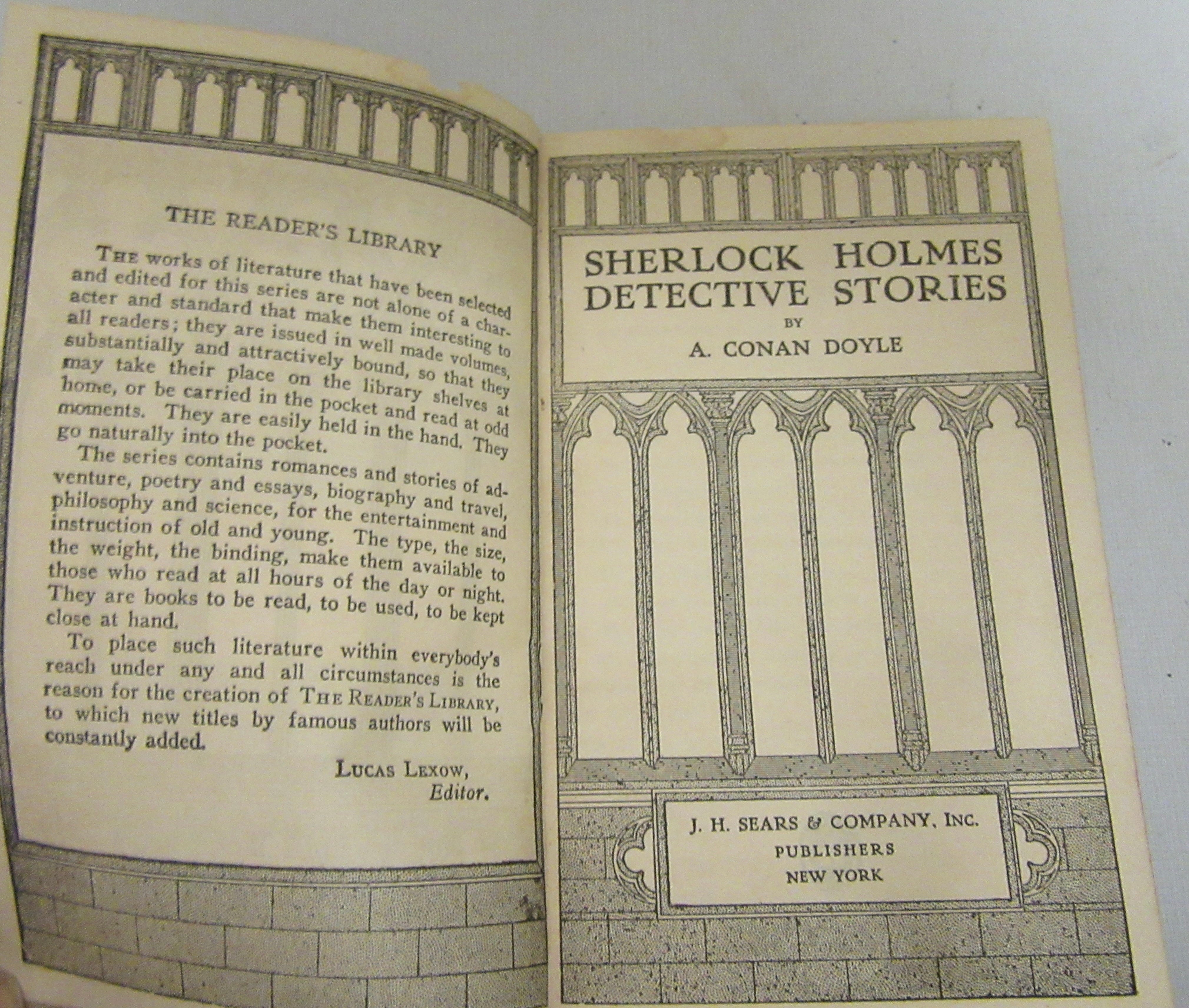
I’m grateful for the little bit of Sherlock Holmes that is alive in so many people.