
Electricity
Gratitude 10/7/2025

I am grateful for the gift of a new day.
My heart is filled with gratitude for the many blessings I have.
I will appreciate the small joys and express my thanks in all circumstances.
Let my attitude of gratitude bring joy to others.
Last week a representative from our Delaware Rural Electric Cooperative came to visit to tell us that they wanted to replace the four wooden electrical poles from the house to the road. It made me think about how grateful I am for electricity.
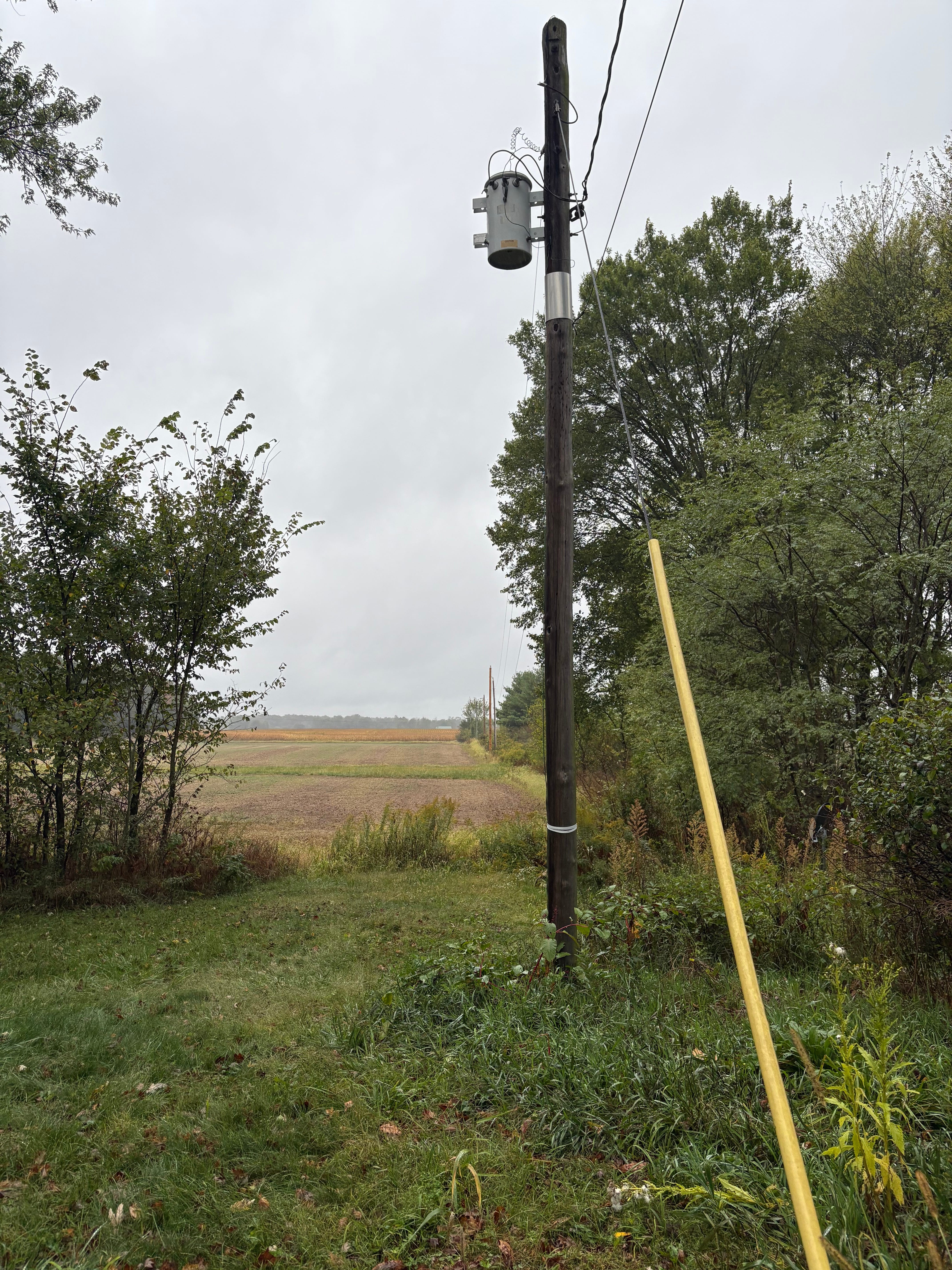
I have lived in this house since the summer of 1975 and I visited my grandparents here before that from the time I was born in 1955. So I figure the existing poles were put in when electricity came to this rural area in the 1930s. It turns out that in 1935 only two of every ten Ohio farms were electrified. My grandmother born in 1899 grew up in this area before farms had electricity. Cities started to be electrified in the 1880s with widespread adoption in the 1890s but it was different in the vast rural areas in the country.
After the creation of the Rural Elecrtrification Administration with FDR’s executive order in 1935, in 1936 Congress passed the Rural Electrification Act. Before that, especially during the Great Depression power to remote areas was not thought to be economically feasible. Powering rural America, like so many things that are not profitable, like Social Security and Medicare, required government direction and funding.
Everything changed with the creation of the Rural Electrification Administration. First it provided desperately needed jobs and it also brought electricity to rural areas by allowing residents to form electric cooperatives. Before that private utility companies had resisted building the necessary infrastructure in rural communities, claiming it was too expensive for the number of new customers gained. Electricity not only improved farm operations, but also greatly improved the quality of life for rural residents.
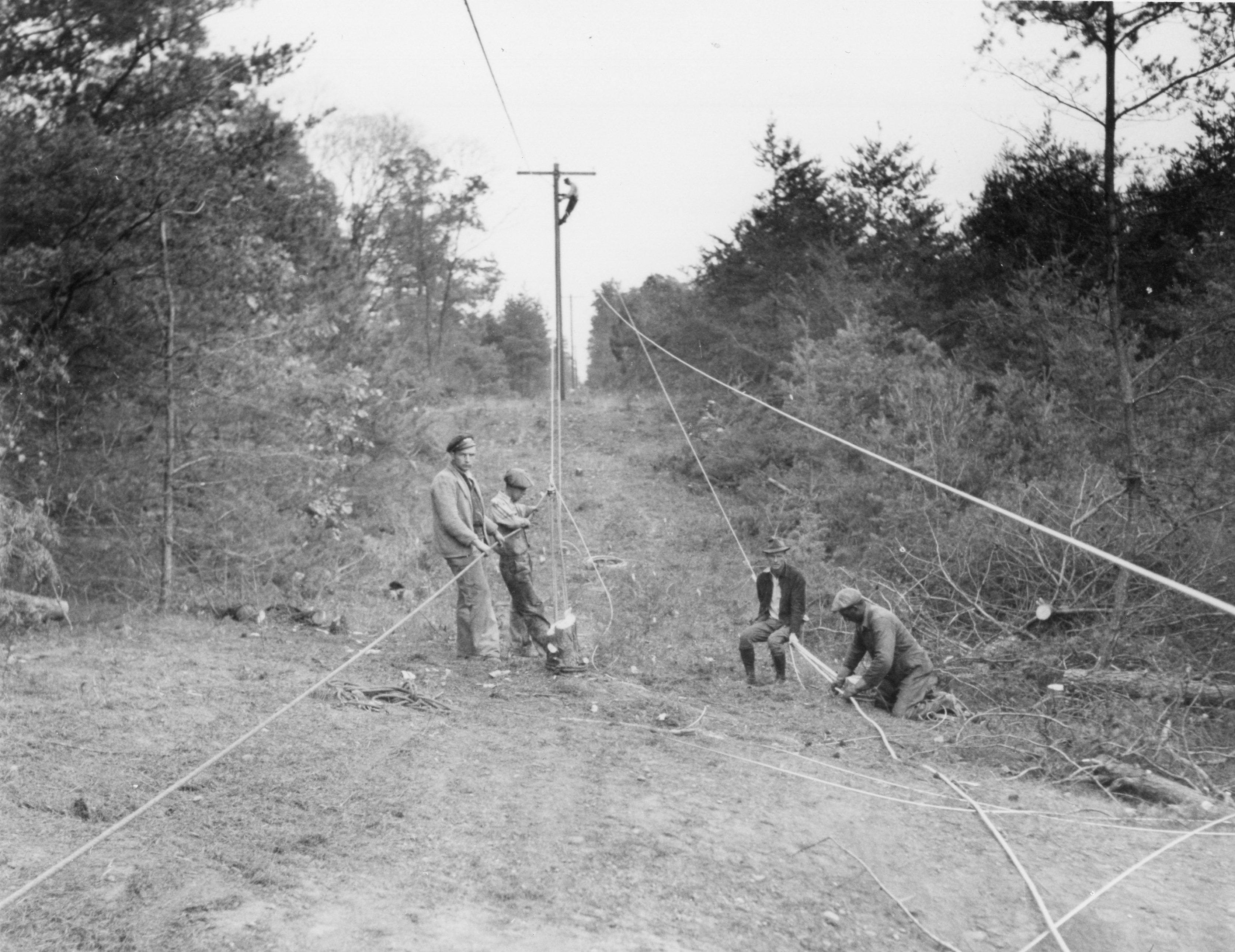
By June 1937, more than 36 percent of rural Ohio had electricity with that number rising to almost 100 percent in 1950. Shortly after rural electric co-ops were established, the cost of electricity was cut in half for all Ohioans. I figure the poles that will be replaced are about 90 years old.
A cooperative is a nonprofit organization formed by individuals or businesses to provide products or services more efficiently as a group. The co-op members also own the co-op and share the profits or benefits. In 2016 the Delaware County Electrical Coop got money to provide high speed Fiber Optic lines for Internet access. Because all my work relies on the Internet, either my online selling business or my editing work, we were eager to sign up. And that changed our lives. I no longer had the slowest dial up Internet access of all the other freelancers!
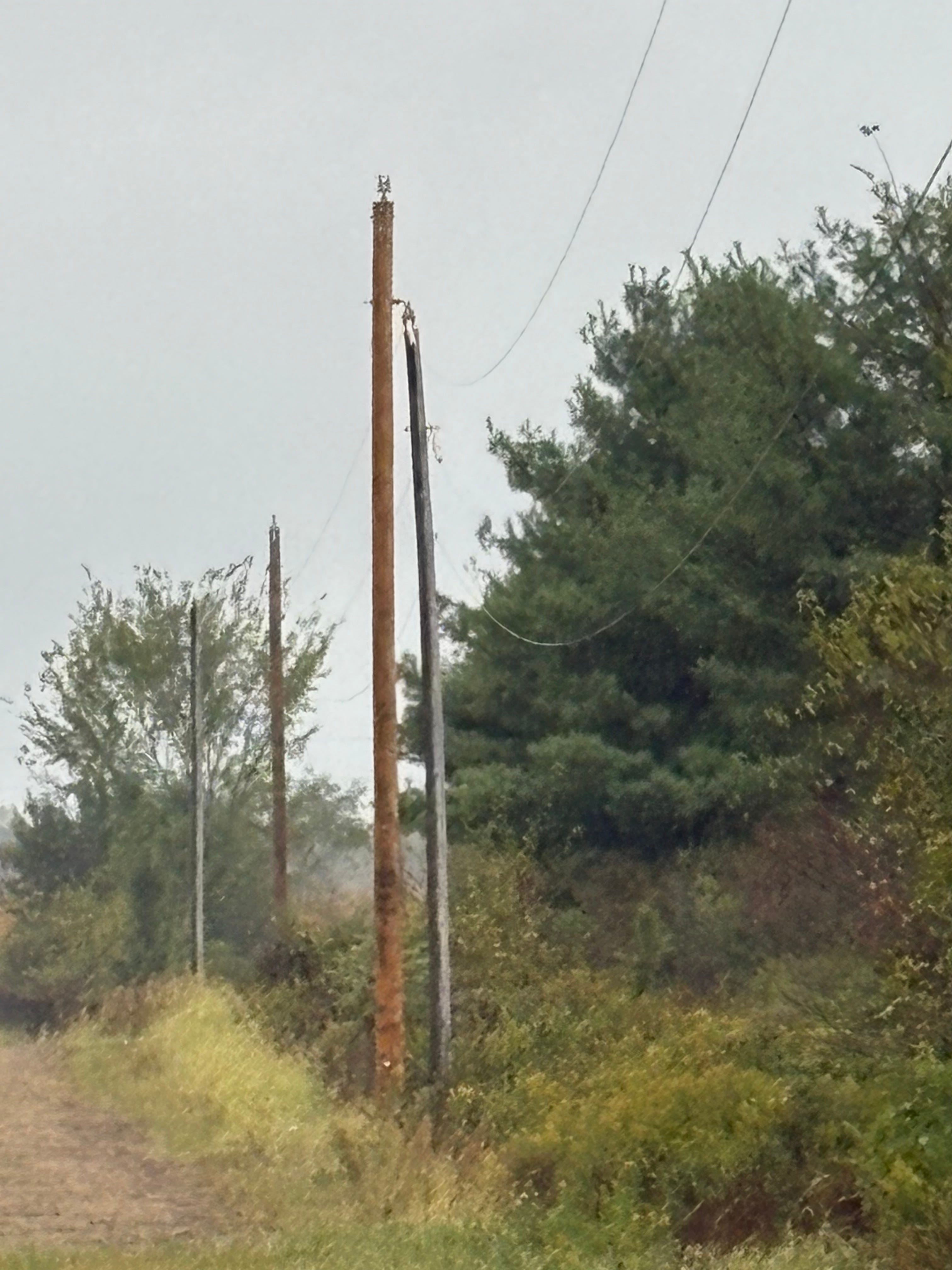
It’s hard to imagine home life without electricity. There are times the electricity goes out for a few hours for one reason or another. The refrigerator stops running, there are no lights, and no oven or stove to cook. The toilet will flush but there is no pump to refill the tank. You can’t wash dishes or take a shower. In the winter, we keep our wood burner going because there is no heat. Most people don’t even have wood burners. Everytime we think of something, like watching TV to pass the time, we think again. We go to bed early after the sun goes down.
I always enjoy the few hours of no electricity because we live and eat by candlelight, which makes me feel as though I’m living in pioneer times. But it can get old when I need to get something done.
Electricity is something I take completely for granted. But what a difference it makes in my life every single minute of every day. I’m so grateful for that.