
Barn Comfort
Gratitude 2/17/2026

I am grateful for the gift of a new day.
My heart is filled with gratitude for the many blessings I have.
I will appreciate the small joys and express my thanks in all circumstances.
Let my attitude of gratitude bring joy to others.
I’m so grateful to have had a true barn experience.
The landscape is littered with old barns. It’s a remnant of our country’s agricultural heritage of family farms that lasted well into the 20th century. Some of these barns are falling apart. Some have been converted into homes or restaurants or museums. Some are still being used.
My cousins’ family farm barn was decontructed and a builder designed and built a beautiful house out of the lumber. It is a joy to behold!


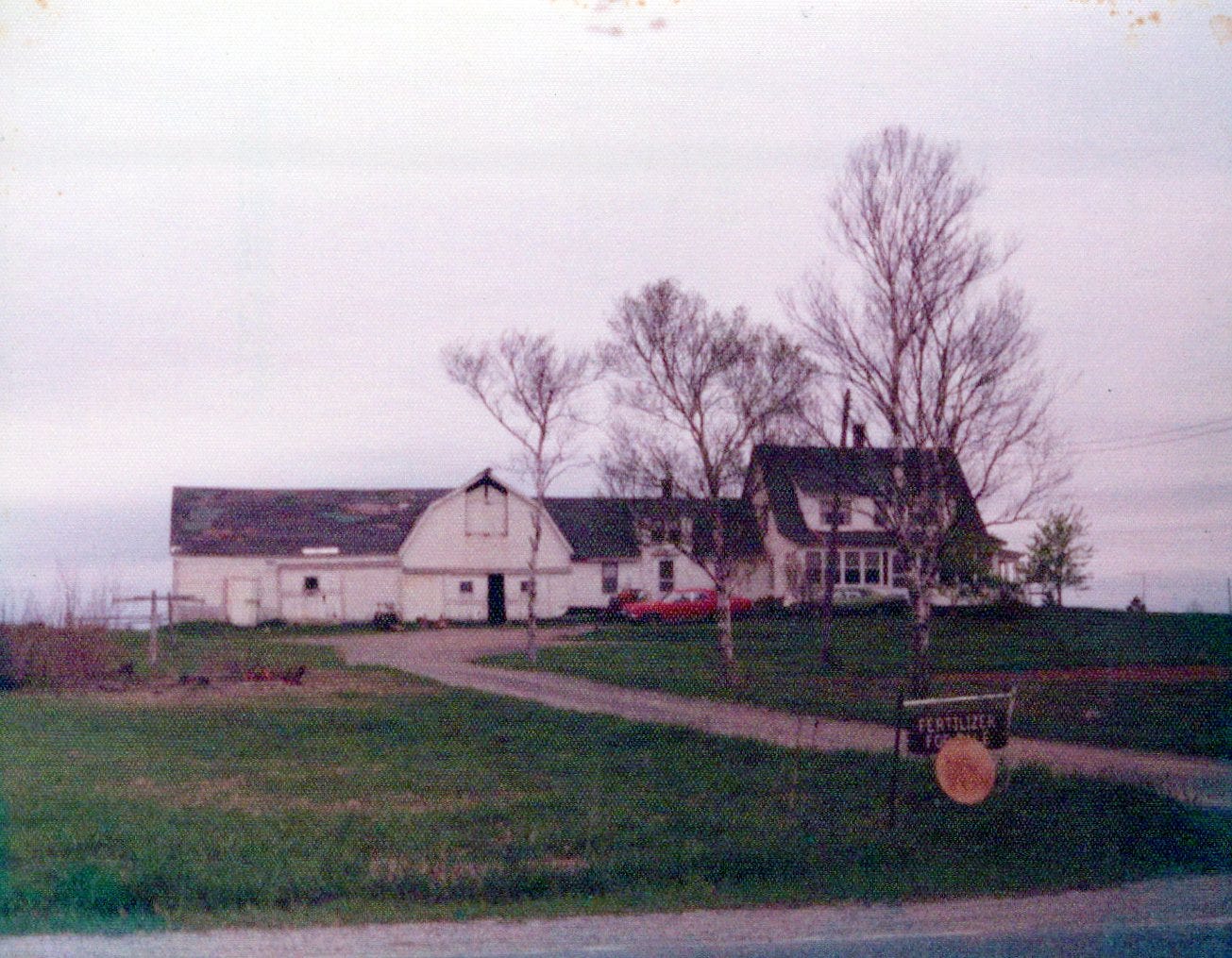
When I graduated in 1976, Stewart and I took a trip to Maine and Canada. On the way to visit Roosevelt’s summer home, Campobello, I snapped this picture of a barn that was attached to the house. In Maine the winters are much colder than in Ohio!
The barn on my property was built by my grandfather in the 1950s. Looking at pictures today that my sister sent, we’re thinking that he started with an old barn, but built a concrete block foundation and many other upgrades.


With his engineering background he designed it to be a “working barn.” There were cows and chickens that lived in the barn. And barn cats! There was a hay loft with an ingenious system for loading bales of hay.
My grandfather made wooden crates out of scrap wood and used them for all kinds of jobs. He made an apple cider press. He painted the shape of each tool so they would be put back in place. He made containers for all kinds of different parts and pieces out of old tin cans.


My grandfather died in 1964, when I was 9 years old. I remember when we got brave enough, we would jump from a high perch into piles of hay in the hay loft. My grandmother died in 1973, and Stewart and I moved here in 1976, when I graduated from college. By then the barn was 25 years old and needed a paint job. My mother who had inherited the farm, said she always wanted a red barn. So we painted it red and being the year of the bicentennial, we painted an American flag (sorta) on the hayloft door. We had goats and chickens and barn cats!


By 2001, being 50 years old, the barn needed maintenance again. Some of the siding was falling off and the roof was leaking. We hired two Amish brothers from Amity, Ohio, Albert and Edward Raber, to do the work. They got a “taxi” driver to bring them down in the morning. They worked all day. And then we drove them back home at night. They fixed the siding and the roof, and the floors that had been damaged and then painted it all white again.
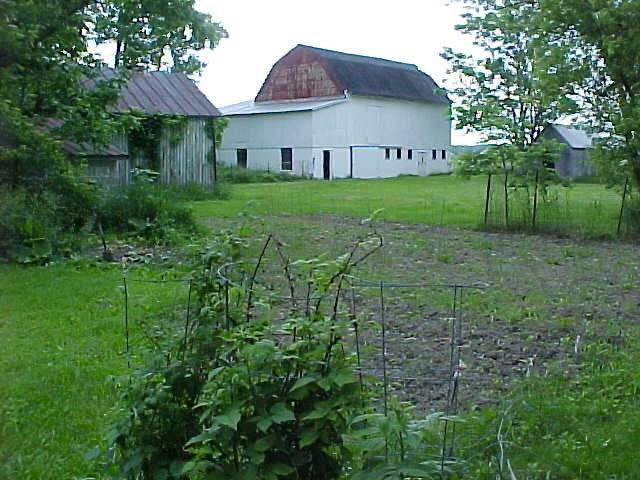
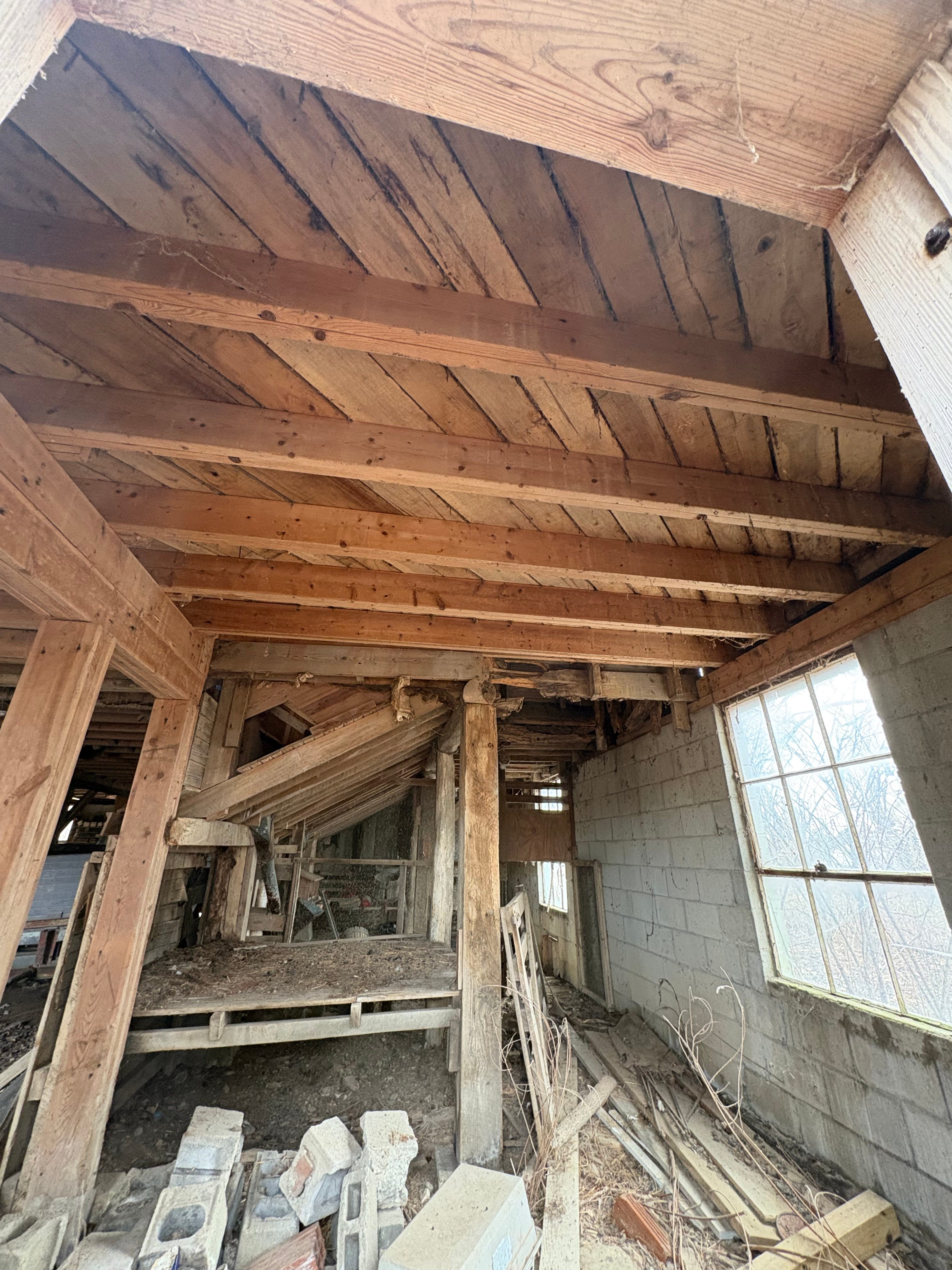
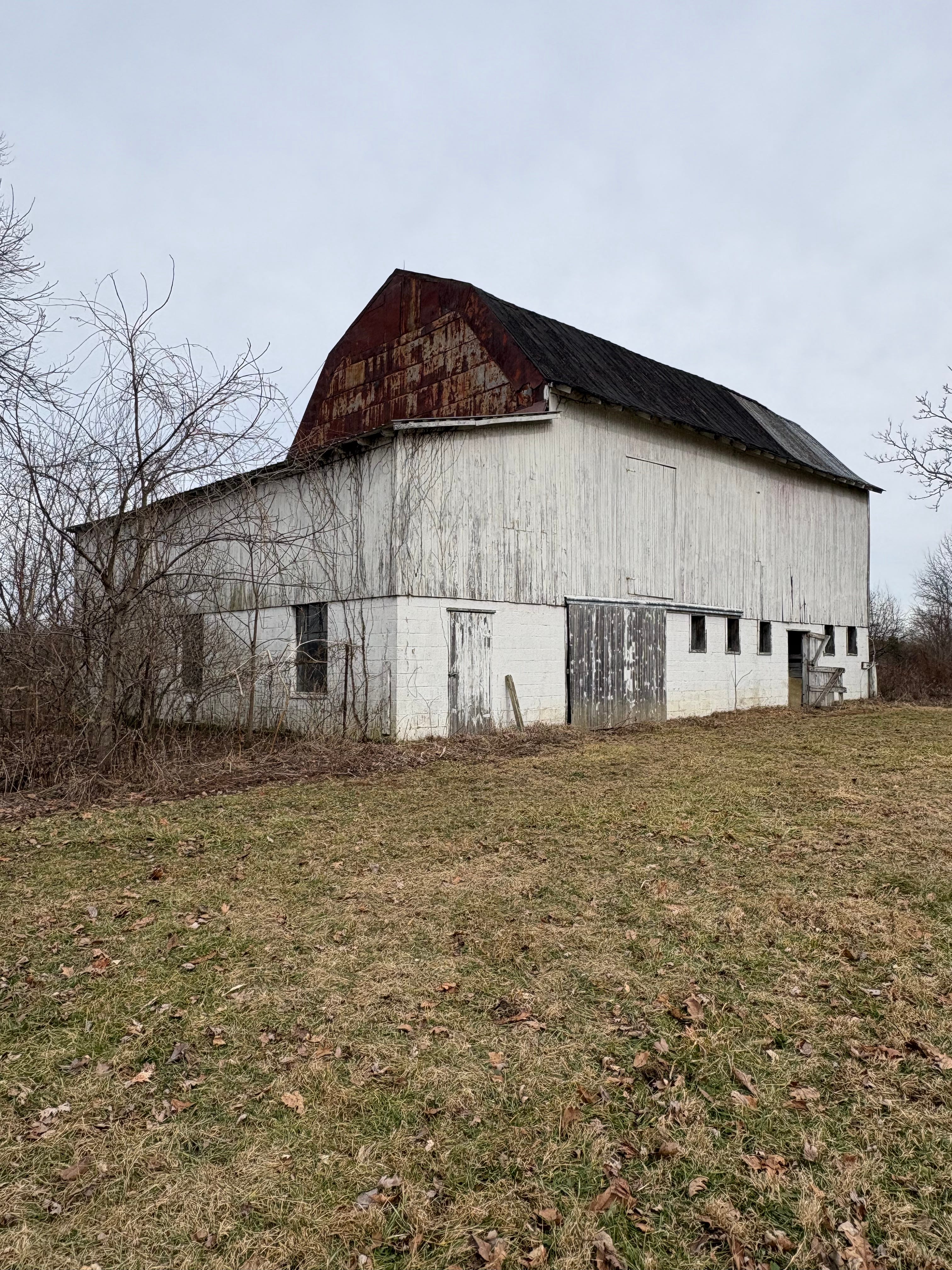
Now it is 2026 and our 75 year old barn needs to be painted again.
There was a barn that was here on this property. I’m not sure when it was built but it was probably around the time the house was built in the late 1830s. In the 1920s, the house was “old” and so was the barn. No one was living in my house at that time and the barn was not being used.
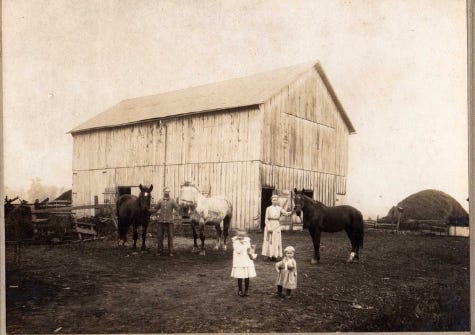
In 2003 before he died that August, I took my mother, Joanna May, to visit her older cousin, Joe Metzger. He was born in 1915 and she was born in 1929. He was “big” Joe and she was “little” Jo when they were growing up. He grew up on the farm on the next road across the field from where I live now. His dad, my grandmother’s older brother, Uncle Harry, and Joe’s three brothers had worked hard putting up hay in the barn and his dad said, “Let’s go up to Centerburg and get some ice cream.” As they were walking towards the house to clean up, the barn burst into flames. Spontaneous combustion. And it burned to the ground.
Instead of building a new barn, they decided to move the barn that was on my property to their house. They hired an “outfit” with a blind horse. They hoisted the barn up on logs and the blind horse, walking in a circle using a winch pulled the barn across the field. It “lives” on Uncle Harry’s farm, today.
Fortunately, the people who purchased Uncle Harry’s farm that did not have indoor plumbing, with the barn from our property had been part of the farm community and instead of tearing it all down, they sold it to people who “restored” the property and even restored the barn. What a godsend!


I love the description of Fern’s uncle’s barn where Wilber grows up in E.B. White’s Charlotte’s Web. It’s what I think most of us envision when we imagine what a barn should be.
“The barn was very large. It was very old. It smelled of hay and it smelled of manure. It smelled of the perspiration of tired horses and the wonderful sweet breath of patient cows. It often had a sort of peaceful smell as though nothing bad could happen ever again in the world.
It smelled of grain and of harness dressing and of axle grease and of rubber boots and of new rope. And whenever the cat was given a fish head to eat, the barn would smell of fish. But mostly it smelled of hay, for there was always hay in the great loft up overhead. And there was always hay being pitched down to the cows and the horses and the sheep.
“The barn was pleasantly warm in winter when the animals spent most of their time indoors, and it was pleasantly cool in summer when the big doors stood wide open to the breeze. The barn had stalls on the main floor for the work horses, tie ups on the main floor for the cows, a sheepfold down below for the sheep, a pigpen down below for Wilbur, and it was full of all sorts of things that you find in barns: ladders, grindstones, pitch forks, monkey wrenches, scythes, lawn mowers, snow shovels, ax handles, milk pails, water buckets, empty grain sacks, and rusty rat traps. It was the kind of barn that swallows like to build their nests in.
It was the kind of barn that children like to play in. And the whole thing was owned by Fern’s uncle, Mr. Homer L. Zuckerman.”
I’m so grateful to have known this kind of barn.